
Aphrodite
Rose Tea for Skin: The Evidence Behind Tea's Most Beautiful Ingredient
Rose has been used for skin health for over 2,000 years. A pharmacist examines what the evidence actually says — and whether the ritual lives up to the history.
Published
2024-03-01
Best read for
Mid-morning beauty ritual
Ritual window
Mid-morning beauty ritual
“Rose petals contain gallic acid, quercetin, and kaempferol — three compounds with strong anti-inflammatory and antioxidant activity. Persian medicine prescribed rose water for skin health 1,000 years ago. The modern research confirms the ancient intuition.”
Rose in clinical pharmacology: more than a pretty ingredient
Rosa damascena (Damask rose) has been used in Persian, Greek, and Ayurvedic medicine for centuries. Modern analysis reveals why: rose petals contain gallic acid, quercetin, kaempferol, and anthocyanins — all of which demonstrate anti-inflammatory, antioxidant, and antimicrobial activity in vitro and in animal models. A 2011 review in the Journal of Research in Medical Sciences documented rose extract's antioxidant activity as comparable to established pharmaceutical antioxidants.
The collagen connection: vitamin C and skin synthesis
Collagen synthesis requires vitamin C as a cofactor — without adequate vitamin C, collagen cannot be properly formed. The lemon in Aphrodite provides natural vitamin C in a bioavailable form. Quercetin from apple skin adds further antioxidant protection against UV-induced collagen degradation. The combination creates an inside-out skin support ritual that addresses three separate mechanisms: antioxidant protection, anti-inflammatory activity, and collagen synthesis support.
The Aphrodite ritual and why timing matters
Skin cell turnover and collagen synthesis are ongoing processes that benefit from consistent antioxidant support rather than occasional high-dose supplementation. A daily Aphrodite ritual — ideally mid-morning when you're between the cortisol peak and the afternoon dip — provides consistent quercetin, vitamin C, and rose polyphenol input. The beauty ritual is real. The pharmacology supports it.
Why readers linger here
Each article blends mythology, sensory detail, and tea knowledge into something slow enough to savour.
The journal is written to deepen the ritual, not distract from it, so every piece feels at home beside the blends.
When the story stirs a mood, the related tea is close at hand for the next pour.
Related blend
Aphrodite
Apple, rose and lemon green tea — beauty in a cup, from the inside out.
Shop AphroditeMore from the journal
Continue deeper into the myths and rituals.
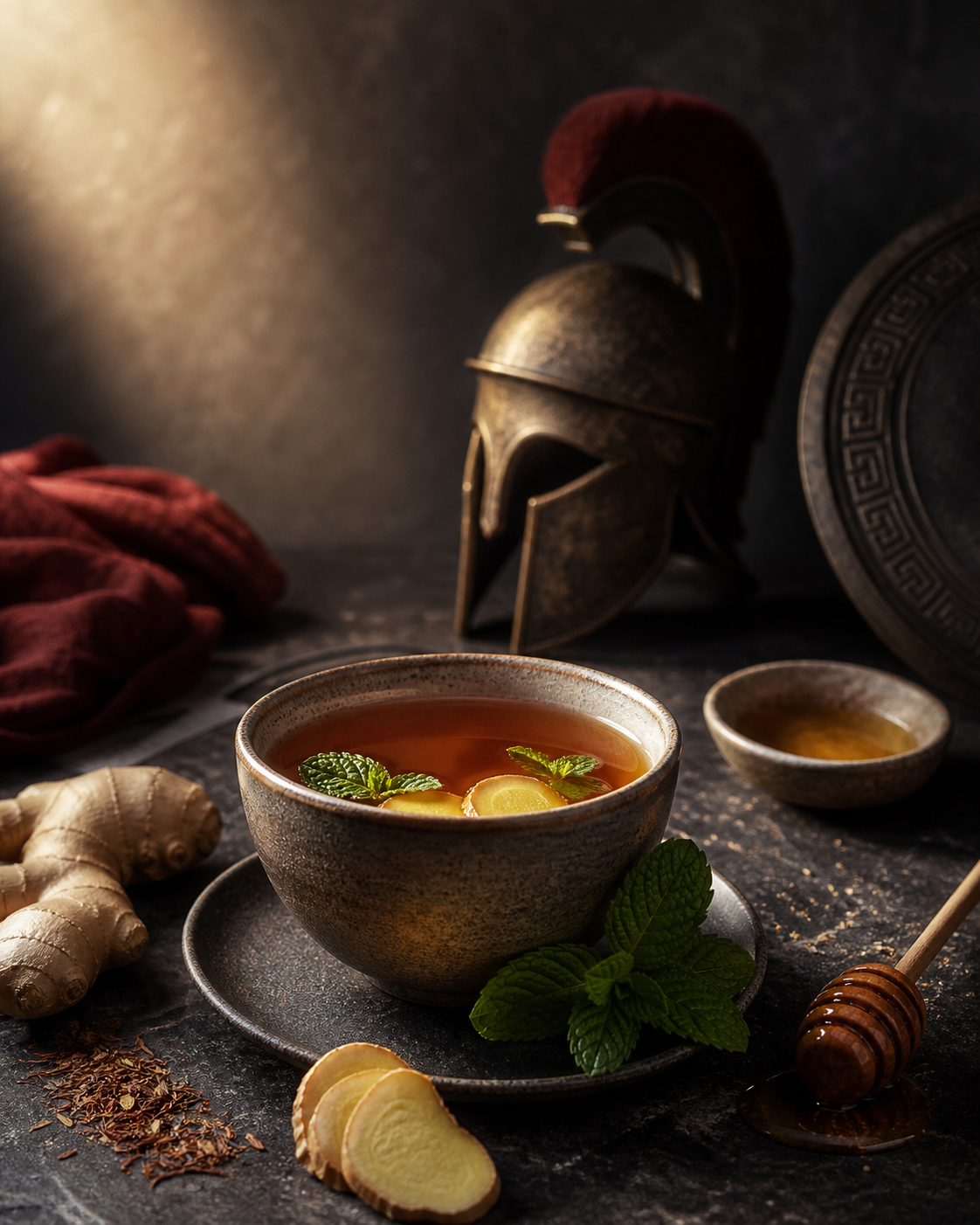
Caffeine-Free Energy Tea: The Ares Ritual for Bold Afternoons
A caffeine-free energy tea should feel vivid, warming, and useful without borrowing alertness from the night ahead. Ares turns ginger, mint, honey, and rooibos into a bold afternoon ritual for people avoiding caffeine.
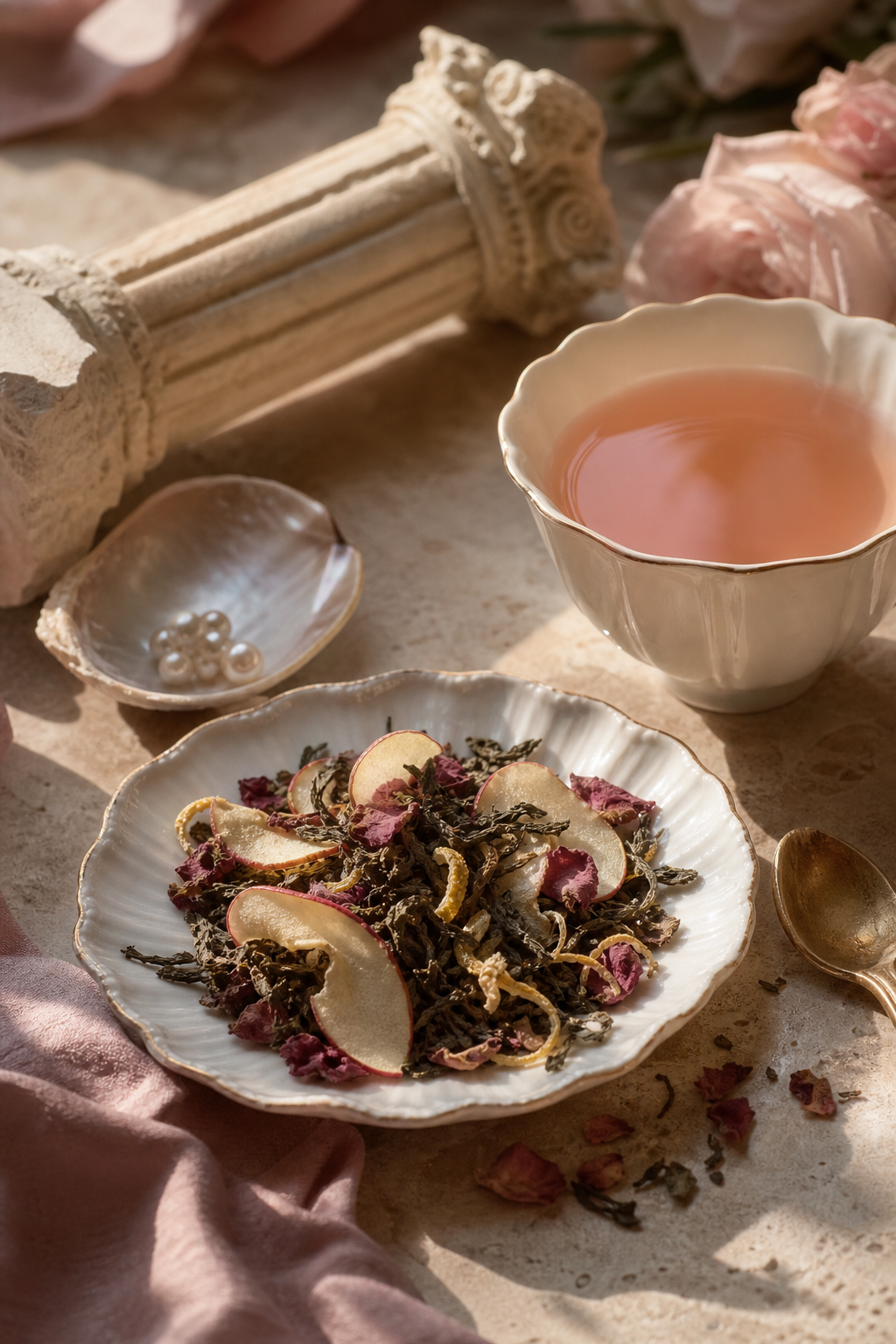
Aphrodite Tea Gift Ritual: Rose, Apple, and Lemon for a Beautiful Cup
A premium herbal tea gift works best when it feels personal, repeatable, and easy to enjoy. Aphrodite turns rose, apple, lemon, and green tea into a thoughtful ritual for beauty, connection, and slow gifting.
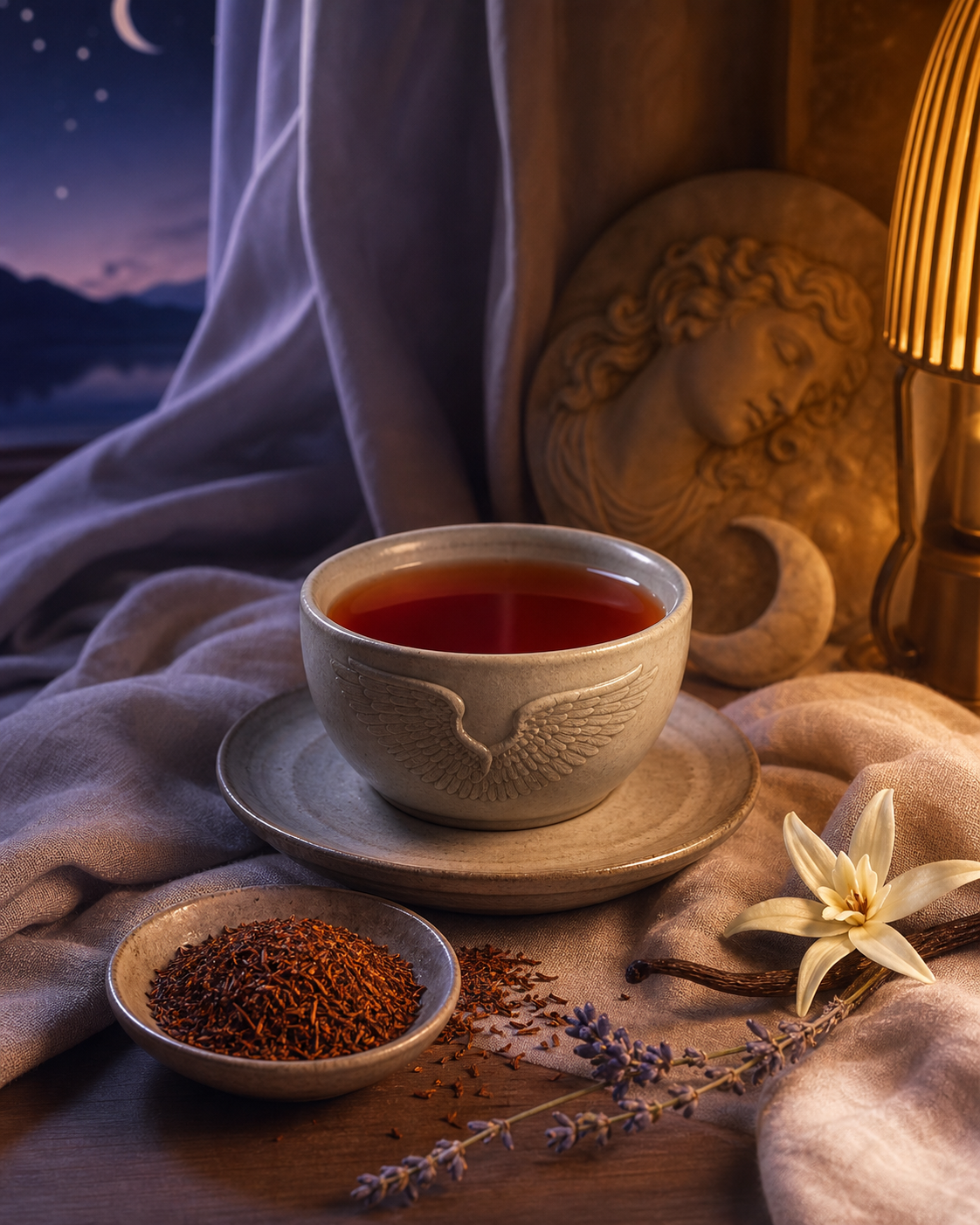
Rooibos Tea for Evening Calm: The Morpheus Ritual After Sunset
Rooibos gives the evening cup real body without caffeine, making it a useful ritual for slower nights, softer light, and a cleaner descent into rest.